Magnesium Nitrate (Magnesium Nitrate) Encyclopedia: The Critical Role of Magnesium Fertilizer in Photosynthesis, Magnesium Deficiency Symptoms, and Drip Irrigation Application Guide (2025 Latest)
I. What Is Magnesium Nitrate?
Magnesium Nitrate Mg(NO₃)₂ is one of the most stable and readily crop-absorbable water-soluble magnesium fertilizers.
It contains:
- Nitrate nitrogen (NO₃⁻) → Rapid uptake
- Water-soluble magnesium (Mg²⁺) → Core component of chlorophyll and a critical nutrient for photosynthesis
Magnesium is the central atom in the chlorophyll molecule (Chlorophyll Core Ion). All crops depend on magnesium for energy metabolism.
In other words, magnesium is the “engine that drives photosynthesis.”
Due to its exceptionally high solubility and compatibility, magnesium nitrate is widely used in:
- Water-soluble fertilizer formulations
- Drip and sprinkler irrigation systems
- Foliar fertilizers
- Agriculture in hot and arid regions
- Regions deficient in secondary and micronutrients (Southeast Asia, South America, Middle East)
II. The Core Functions of Magnesium in Plants (Why Is Magnesium Fertilizer Essential?)
1. Central Component of Chlorophyll
Photosynthesis in plants cannot occur without magnesium. Magnesium deficiency = reduced photosynthetic efficiency.
2. Facilitates Energy Transfer (ATP Activation)
Magnesium participates in energy exchange, enhancing crop growth rate and stress resistance.
3. Regulates Protein Synthesis
Magnesium promotes amino acid synthesis, directly influencing crop vigor and yield.
4. Enhances Crop Resistance to Heat and Drought
Demand for magnesium fertilizers is growing fastest in tropical regions (Indonesia, Malaysia, Thailand, Middle East).
Thus, magnesium is often called the “second nitrogen fertilizer”—its deficiency can be as damaging as nitrogen deficiency.
III. Visual Guide to Magnesium Deficiency Symptoms (Most Common Farm Issues)
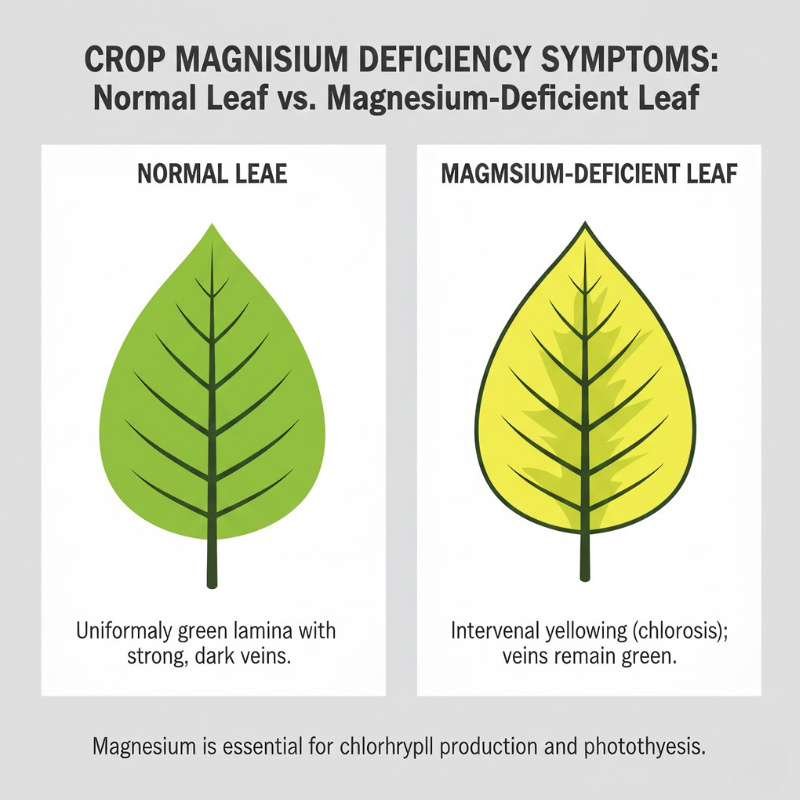
Magnesium deficiency exhibits a distinct “reverse leaf yellowing” pattern:
1. Interveinal Chlorosis
Leaf veins remain green while the leaf blade turns yellow or pale green.
2. Older Leaves Yellow First, Progressing Toward Newer Leaves
This contrasts with iron deficiency (where new leaves yellow first).
3. Leaf Margin Scorching and Necrosis
4. Thin, Drooping Leaves and Premature Leaf Drop
5. Overall Wilting and Reduced Photosynthesis
Crops commonly affected by magnesium deficiency include:
- Tomato
- Pepper
- Grape
- Blueberry
- Banana
- Potato
- Citrus
- Corn
- Coffee and cocoa (tropical cash crops)
🔍 Magnesium deficiency is often linked to high temperatures, drought, and weak root systems—magnesium supplementation is essential in hot climates.
IV. Magnesium Nitrate vs. Magnesium Sulfate (Why Premium Agriculture Prefers Magnesium Nitrate?)
| Parameter | Magnesium Nitrate | Magnesium Sulfate |
|---|---|---|
| Solubility | ⭐⭐⭐⭐⭐ Extremely High | ⭐⭐⭐ Moderate |
| Uptake Efficiency | High | Moderate |
| Contains Nitrate Nitrogen | ✔ | ✘ |
| Compatibility with Drip Irrigation | Perfectly Compatible | Prone to Crystallization in Hard Water |
| Performance in High Temperatures | Superior | Moderate |
| Compatibility with Calcium Fertilizers | Higher | Often Incompatible |
| Cost | Slightly Higher | Lower |
Magnesium nitrate offers faster uptake, better compatibility, and higher solubility than magnesium sulfate, making it the mainstream magnesium fertilizer in modern agriculture.
V. Hansol Chemical’s Export Specifications for Magnesium Nitrate (High Purity)
| Parameter | Specification |
|---|---|
| Appearance | White crystals |
| MgO | ≥ 15% (High Purity) |
| Nitrogen (N) | 10–11% (Nitrate Form) |
| Water Solubility | 100% |
| Chloride Ion | ≤ 0.02% (Chloride-Free) |
| Heavy Metals | Low |
| Packaging | 25kg, 1000kg, OEM |
| Applications | Drip irrigation, water-soluble fertilizers, foliar sprays, blending raw material |
Hansol’s product serves as a “core formulation ingredient” for water-soluble fertilizer manufacturers.
VI. Application Methods and Dosage Guidelines (Drip Irrigation / Foliar Spray)
1. Drip Fertigation (Most Effective Method)
- Dosage: 3–6 kg per mu per application
- Frequency: Every 7–14 days
Suitable for: Tomato, pepper, grape, blueberry, banana.
2. Foliar Spraying (Rapid Correction of Magnesium Deficiency)
- 0.2–0.5% dilution solution
- Apply once every 7 days
3. Use in Water-Soluble Fertilizer Formulations
Commonly used in:
- 13-5-32+ME
- 20-20-20
- High-potassium NPK blends
- Fruit enlargement stage water-soluble fertilizers
Thanks to its excellent compatibility and high solubility, magnesium nitrate is a standard raw material in water-soluble fertilizer production worldwide.
VII. Crops Best Suited for Magnesium Nitrate (Top 10 Highest-Demand Categories)
- Tomato
- Pepper
- Grape
- Blueberry
- Banana
- Citrus
- Potato
- Corn
- Coffee and cocoa
- All fruit and vegetable crops (especially in hot climates)
Magnesium nitrate delivers the most noticeable benefits for crops grown under high temperatures, intense sunlight, and high fruit quality requirements.
VIII. Global Magnesium Nitrate Market Trends (2025–2030)
1. Widespread Magnesium Deficiency in Tropical Countries → Fastest-Growing Demand
Indonesia, Thailand, Malaysia, and the Middle East are projected to see annual growth rates of 10–15%.
2. Expansion of Drip Irrigation Systems → Rising Demand for Water-Soluble Fertilizers and Magnesium Nitrate
3. Mass Production of Water-Soluble Fertilizer Blends → Steady Increase in Bulk Raw Material Demand
4. Growing Magnesium Fertilizer Use in Premium Fruit & Vegetable Exporters (Peru, Chile, South Africa)
IX. Frequently Asked Questions (FAQ)
Q1: Which is better—magnesium nitrate or magnesium sulfate?
Magnesium nitrate offers superior absorption, higher solubility, and better compatibility with drip irrigation systems.
Q2: Can it be mixed with calcium fertilizers?
Yes—it exhibits high compatibility with calcium nitrate.
Q3: Is it more expensive than magnesium sulfate?
Yes, but it provides higher uptake efficiency and overall application effectiveness.