Comprehensive Guide to Fertilizer Export Regulations: Dangerous Goods Classification, Packaging Requirements, and Maritime Compliance for CAN, Calcium Nitrate, and Magnesium Nitrate (2025)
I. Why Must Fertilizer Exporters Pay Attention to Dangerous Goods Regulations?
CAN, calcium nitrate (CN), and magnesium nitrate (MN) are nitrate-based chemicals that exhibit oxidizing properties under specific conditions, making them subject to strict dangerous goods regulations during global transportation.
International regulations require the following during export and maritime shipping:
- Correct classification (DG Class)
- Proper packaging
- Accurate declaration
- Submission of compliant MSDS, shipping declaration, and dangerous goods manifest
- Use of designated hazard labels
- Compliance with the IMDG Code (International Maritime Dangerous Goods Code)
Any non-compliant shipment may be denied loading, returned, or subject to fines.
Therefore, both exporters and importers must fully understand the dangerous goods classification and maritime shipping requirements.
II. Dangerous Goods Classification (IMDG Code / UN Numbers)
Below is the internationally recognized transport classification for CAN, calcium nitrate, and magnesium nitrate:
1. CAN (Calcium Ammonium Nitrate) Dangerous Goods Classification
| Item | Description |
|---|---|
| IMDG Class | Class 5.1 (Oxidizing Solid) |
| UN Number | UN 2067 |
| Packing Group (PG) | III |
| Hazard Definition | Strong oxidizing agent; may accelerate combustion |
| Transport Restrictions? | Permitted for transport, but requires compliant declaration |
Certain countries impose stricter controls on CAN, particularly in the Middle East and parts of Europe.
2. Calcium Nitrate (CN) Dangerous Goods Classification
| Item | Description |
|---|---|
| IMDG Class | Class 5.1 |
| UN Number | UN 1454 |
| Packing Group | III |
| Characteristics | Chloride-free, white crystals, highly hygroscopic |
| Special Notes | Requires moisture-resistant packaging and ventilated transport |
3. Magnesium Nitrate (MN) Dangerous Goods Classification
| Item | Description |
|---|---|
| IMDG Class | Class 5.1 |
| UN Number | UN 1474 |
| Packing Group | III |
| Characteristics | High solubility, requires high-purity standards |
Magnesium nitrate has high export volumes to tropical countries but demands stricter packaging and humidity control.
III. Simplified Guide to the IMDG Code (International Maritime Dangerous Goods Code)
All nitrate-containing fertilizers must comply with the latest revised edition of the IMDG Code:
Core Requirements:
- Class 5.1 shipments must display the “oxidizing substance” label
- Must submit an MSDS in the latest 16-section GHS format
- Transport packaging must be UN-certified
- Container loading must use ventilated structures
- Cargo must be insulated, moisture-proof, and waterproof
- Must be stowed separately from combustible materials
- Must not be placed near Class 4 (flammable solids) cargo
Improper packaging or declaration is the leading cause of shipment rejection.
IV. Packaging Requirements (UN Packing Standard)
Dangerous goods packaging must meet the following criteria:
1. UN-Certified Packaging (UN Marked Bags)
- 25kg / 50kg polyethylene (PE) bags
- 1000kg bulk bags (FIBCs)
- Must bear a UN marking and batch number, e.g., UN 5H3/Y26/S/24/KR
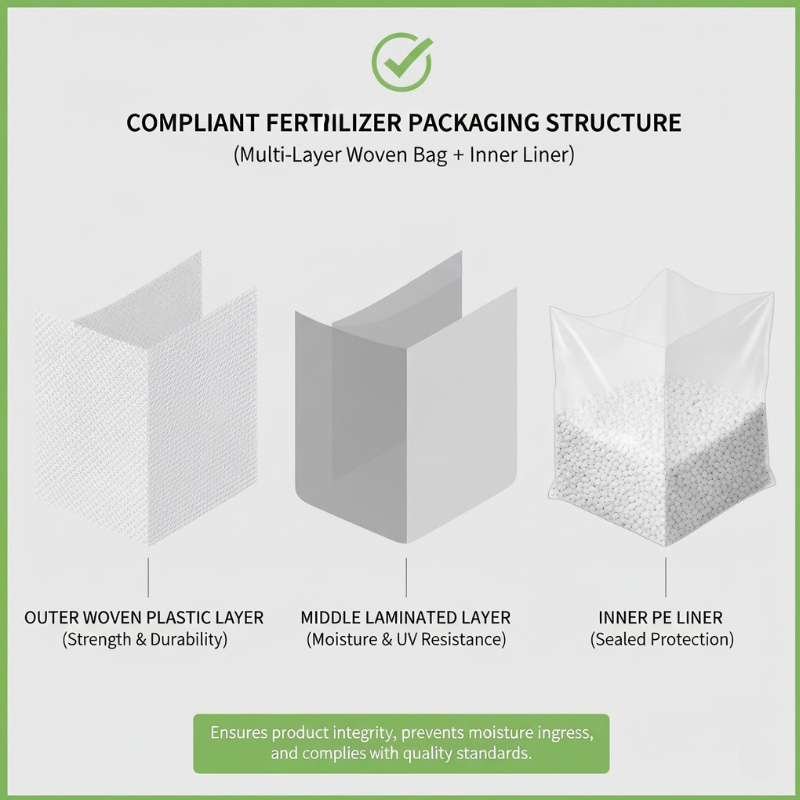
2. Multi-Layer Moisture-Resistant Structure
- Outer layer: High-strength PP/PE
- Inner layer: Moisture barrier film
- Optional: Aluminum-lined inner bag (recommended for calcium nitrate/magnesium nitrate)
3. Pallet Requirements
- Heat-treated wooden pallets or plastic pallets
- Must be stretch-wrapped and secured
V. Dangerous Goods Labeling
Each bag or outer packaging of every pallet must display:
① DG Class 5.1 Label (Yellow Oxidizer Symbol)
② UN Number (UN 2067 / UN 1454 / UN 1474)
③ Product Name (in English + HS Code)
④ Net Weight, Gross Weight, Batch Number, Production Date
Missing labels → Refusal of port entry or cargo loading.
VI. Required Export Documentation Checklist (for Importers)
Hansol Chemical provides a complete set of export documents, including:
- ✔ MSDS (Latest GHS Format)
- ✔ COA (Certificate of Analysis)
- ✔ Dangerous Goods Declaration (DG Declaration)
- ✔ Shipping Safety Documentation
- ✔ Certificate of Origin (CO)
- ✔ SGS / CIQ Inspection Reports (Optional)
- ✔ Dangerous Goods Container Stowage Plan
VII. Maritime Dangerous Goods Declaration Process (Essential Reading for Exporters & Freight Forwarders)
Standard procedure is as follows:
Step 1: Confirm Dangerous Goods Classification
Determine the correct UN number and DG Class.
Step 2: Submit MSDS to Shipping Line for Review
Booking can only proceed after approval.
Step 3: Submit Dangerous Goods Declaration Form (DG Declaration)
Step 4: Dangerous Goods Container Stuffing
- Ventilation
- Moisture protection
- Layered stacking
- Label application
Step 5: Shipping Line Container Inspection (DG Check)
Step 6: Release and Loading
Any incorrect information may result in customs rejection or inspection delays.
VIII. Additional Country-Specific Requirements (Focus on Southeast Asia & Middle East)
1. Indonesia
- COA and MSDS mandatory
- Some ports require additional pre-shipment inspection (e.g., SGS)
2. Malaysia
- Certain nitrate products require pre-registration
- Pre-loading sampling inspection required
3. United Arab Emirates (UAE)
- Strict controls on Class 5.1 substances
- Import Certificate (IC) must be obtained in advance
4. Saudi Arabia (KSA)
- SASO-related documentation required
- Special permits needed for certain dangerous goods
IX. Hansol Chemical’s Compliance Capabilities
Hansol Chemical maintains a mature international compliance system for exporting CAN, CN, MN, and water-soluble fertilizers:
✔ UN-standard packaging
✔ Complete DG documentation (MSDS, DG customs paperwork)
✔ Full suite of SGS / COA / Certificate of Origin support
✔ Experienced dangerous goods export team
✔ Proven compliance record in 30+ global markets
✔ Professional-grade supply chain and packaging management
— This ensures every export shipment meets maritime, port, and destination-country regulatory requirements, minimizing client risk.